

At a glance: Store a motorcycle helmet in a fixed place where it cannot fall, protected from sunlight and moisture. Do not hang it on the handlebars or mirror, as this presses a dent into the lining. Let it air out with the opening uncovered after a ride, wash the lining regularly and replace the helmet after every impact.
The helmet is the most important piece of your gear – and the most delicate. How you store it between rides helps determine how long it protects you. Put down incorrectly, the EPS shell suffers, the lining loses its shape and, in the worst case, it falls off the handlebars once too often. This guide shows you how to store your helmet correctly.
Why helmet storage affects safety
A helmet's protective effect depends on the compression-resistant EPS inner shell. It is designed for a single hard impact – even a fall from hip height onto a hard floor can cause invisible damage. That is why a helmet belongs in a fixed, secure place, not on the seat, tank or edge of a table where it can roll off.
The basic rules of helmet storage
- Do not hang it on the handlebars or mirror. Over time, the narrow contact point presses a dent into the lining – the helmet fits less well afterwards.
- Store in a cool, dry, dark place. Direct sunlight and UV cause the shell and graphics to fade and become brittle over time.
- Not near solvents, petrol or exhaust fumes. Vapours can attack the shell and adhesive – the garage is only ideal if it is well ventilated.
- Place it on a firm surface or holder, with the opening facing down so dust does not fall into the lining.
Caring for the lining and preventing odours
Sweat is the most common reason helmets smell musty. On most models, the cheek and head padding can be removed and washed at 30 degrees by hand or on a gentle cycle. Air the helmet out with the opening uncovered after every longer ride instead of putting it straight in its bag – this lets the lining dry through and gives bacteria no chance.
Treating the visor correctly
Clean the visor only with lukewarm water and a soft cloth; never wipe it dry – dust particles scratch the coating. Leave the visor slightly open for storage so the seal is not permanently under tension.
When does a helmet need replacing?
After every fall in which the helmet has hit the ground – even without visible damage. And regardless of that, after about five to seven years from the manufacturing date, because adhesive and impact-absorbing material age. You will usually find the manufacturing date on a sticker under the lining.
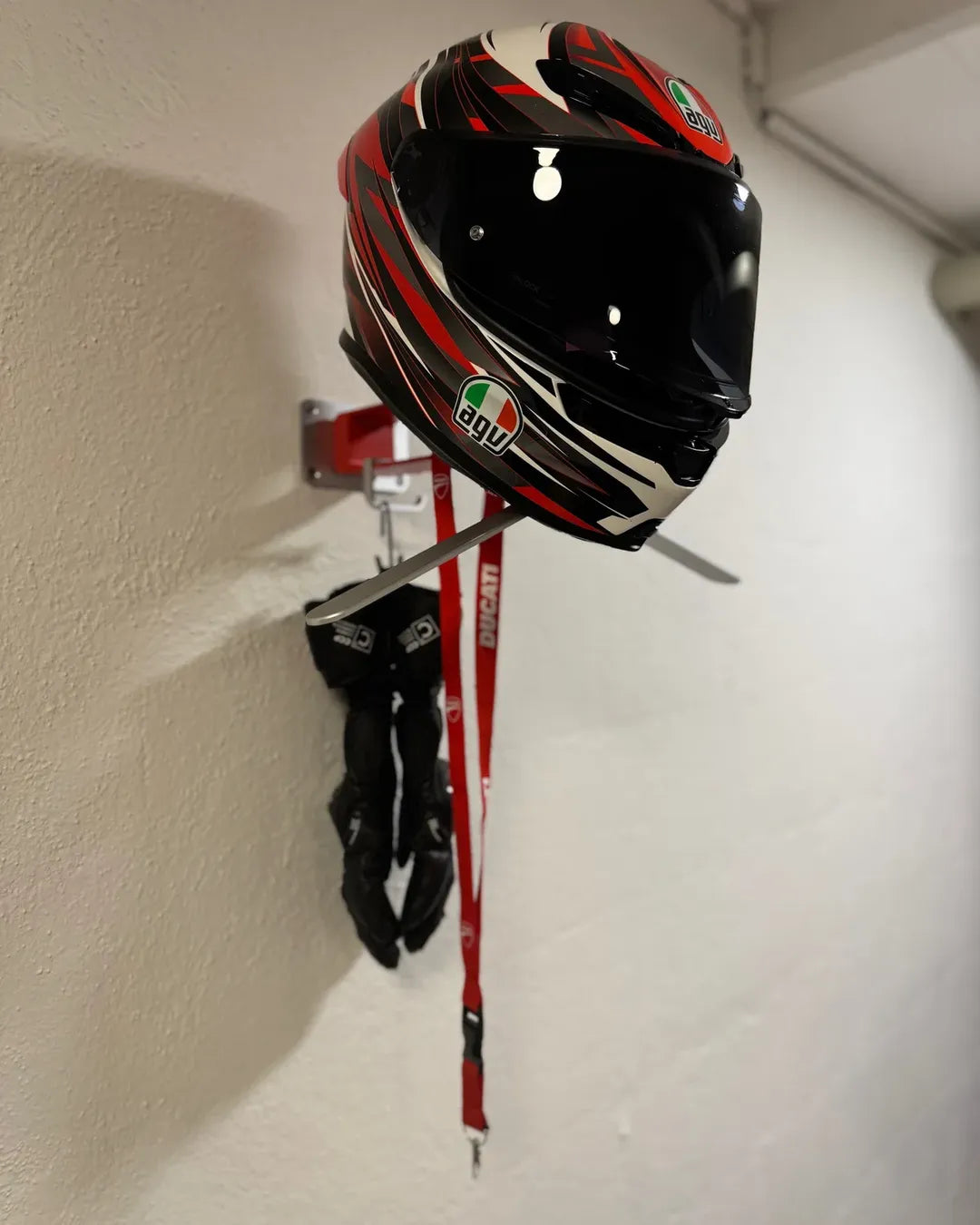
A helmet belongs where you can see it
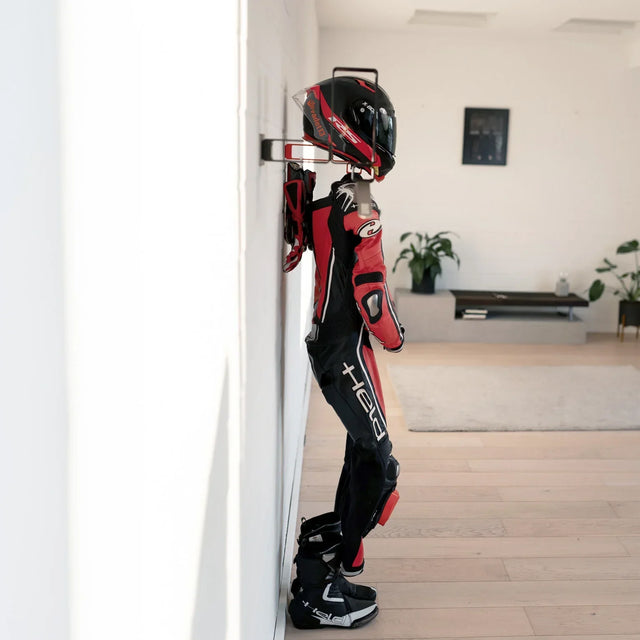
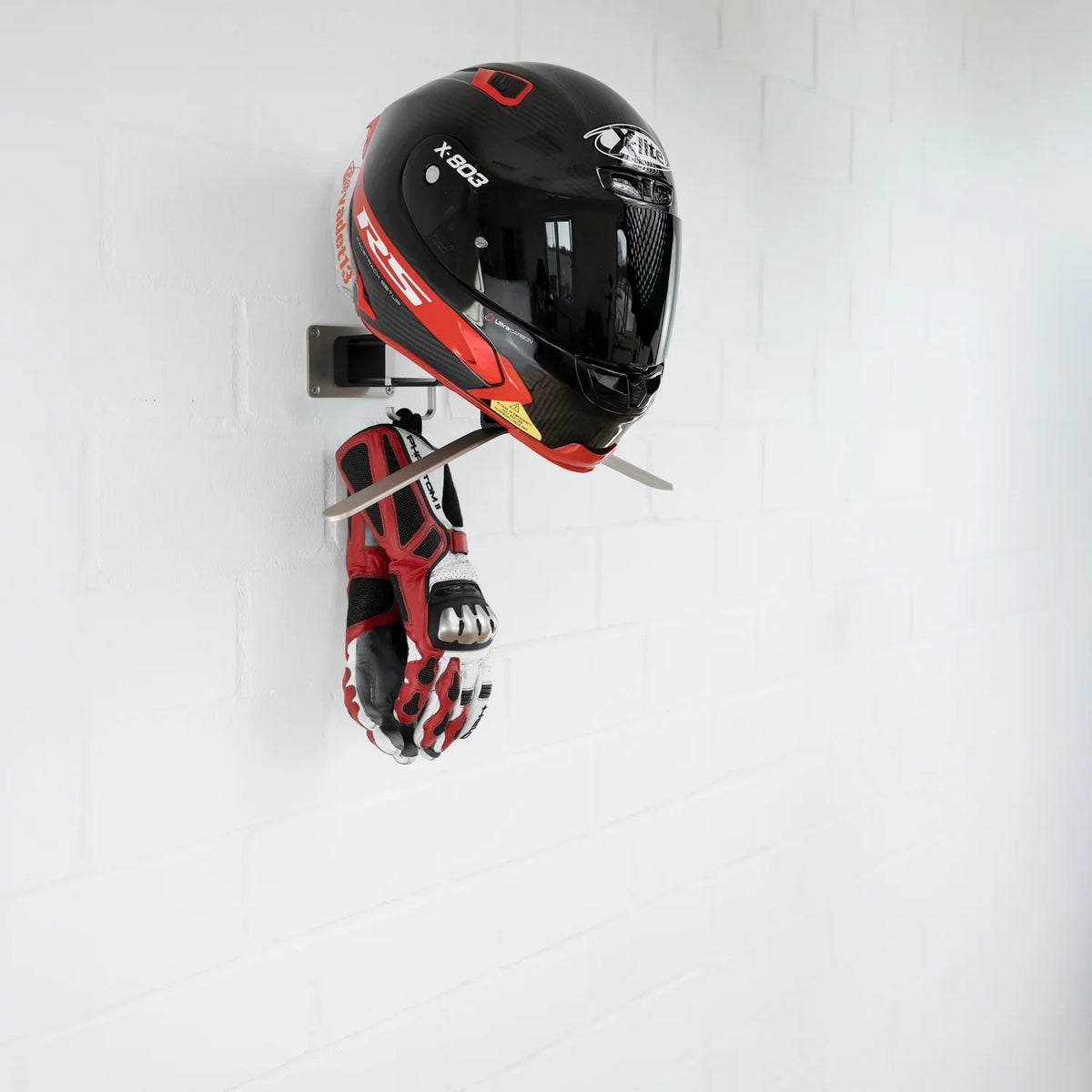
On the wall instead of a shelf: airy storage, with nothing pressing on the visor.
To the gallery →Keep it within reach rather than buried away
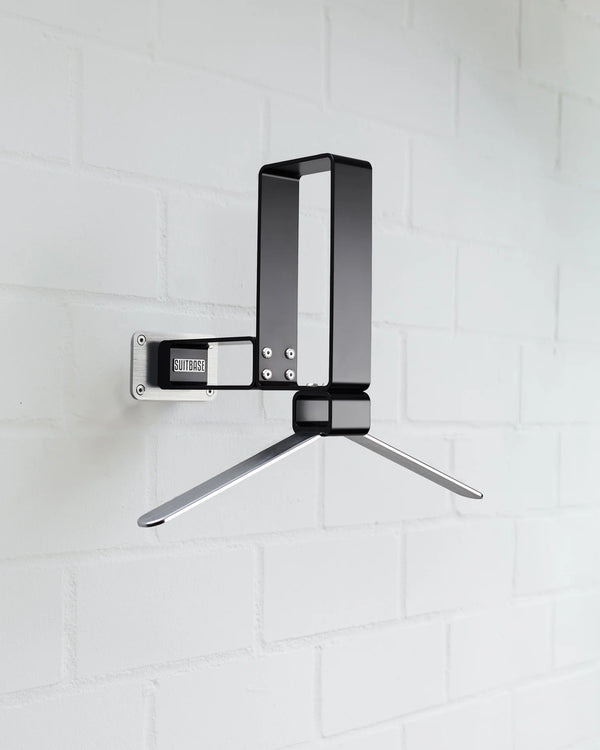
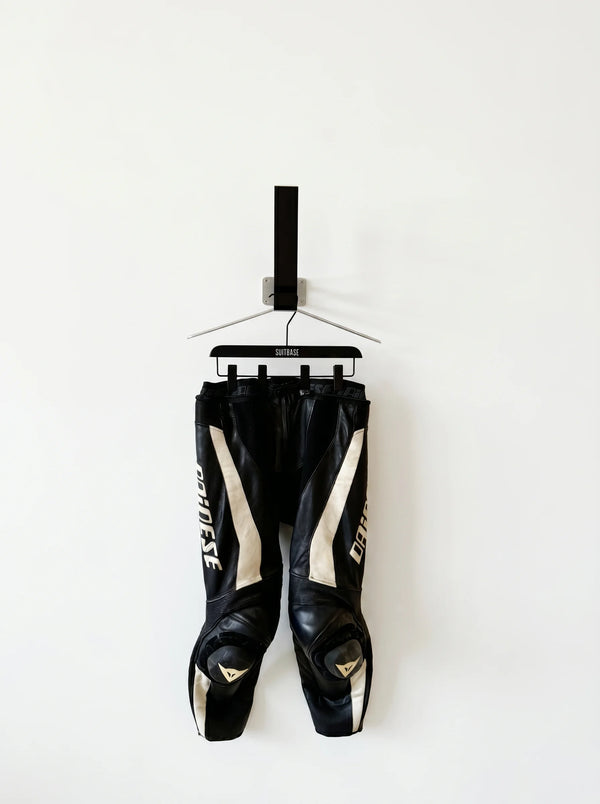
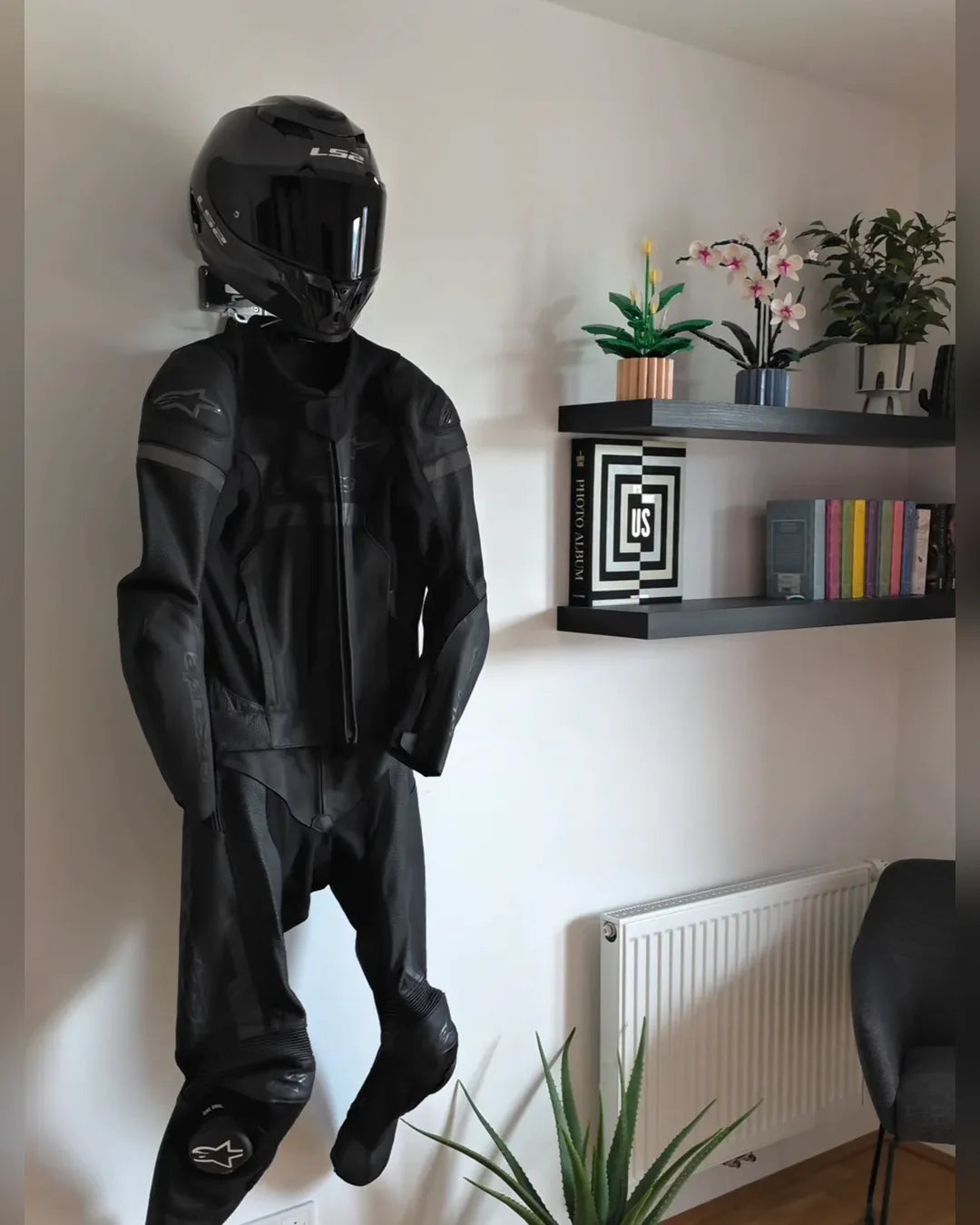
The best place to store your helmet is where your suit hangs too – in a permanent place, easy to reach and free from pressure points. The SUITBASE® PRO V4 was designed for precisely this reason. Riding suit, helmet & more stored safely and compactly, always ready for the next ride – clean, without pressure, in style. As your gear deserves.
Frequently asked questions
Can I leave the helmet on the motorcycle?
Only briefly. Outside overnight, it suffers from moisture, UV and temperature changes – and is an easy target for theft. For long-term storage, it belongs indoors.
How do I store a helmet in winter?
Dry, cool and dark, with the lining aired out or washed. A breathable helmet bag protects against dust, while an airtight bag encourages moisture.
How do you dry a motorcycle helmet?
Let the helmet air out with the opening uncovered after a ride instead of putting it straight in its bag. After riding in rain, remove the removable padding, wash at 30 degrees if needed and let it dry at room temperature. Heat from a radiator or hairdryer damages the interior.
Does a helmet dryer help?
Yes, with damp lining after riding in rain. It just needs to use gentle, not hot air – heat damages the interior.
Related: the guide to storing motorcycle clothing.